
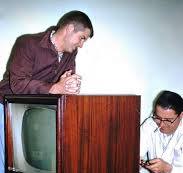
He was the most important guy in town. Loftier than the mayor, more vital than the Chief of Police, more sought after than the Pastor of the First Baptist Church. He was the TV Repairman, and he alone decided if and when you’d watch Howdy Doody and Buffalo Bob.
By the mid-1950’s, television had taken the country by storm. Half of all households were finally able to afford a set, and we watched anything they put on the air – from mid-afternoon country bands of questionable talent to morning beauty shows with a grand prize of $25. Yes, we watched it all and we were especially tuned into You Bet Your Life with Groucho Marx, I Love Lucy, Leave It to Beaver, and Gunsmoke.
But.
The early TVs had things called tubes with the approximate life span of a butterfly and when even one of the tubes went down, it was lights-out for TV watching. You could tell when the end was near for one of the tubes. The contrast knob could no longer get rid of the snowflakes, or the picture began rolling or would tilt horizontally. An emergency phone call was made and families waited in anticipation for the response of the TV Repairman.
“I’ll try for Monday,” he might say.
“Monday! Five days from now! Could you please, please come Friday so we can see the Jack Benny Show? You will? Thank you, thank you! Mom will make you a homemade fruit cake this Christmas.”
Modern America would not recognize TVs in the early days. They came with screens between 17- and 21-inches and they were housed in clunky wooden or metal cabinets to somewhat resemble pieces of furniture. They were all black and white since all the TV shows were in black and white. Some came with antennas and rabbit ears which did a questionable job of snatching the TV waves from the atmosphere. Fifty miles was the approximate limit. The early TVs were also expensive. A typical RCA black-and-white console would cost around $389 – a king’s ransom in those days. But families would sacrifice anything in order to see The Honeymooners or The Wonderful World of Disney.
But alas, the TV Repairman has now gone the way of whale oil lamps. There are no more tubes in televisions, meaning the set will likely last until you get tired of seeing it on your wall, and today’s TVs are cheap. You can buy a brand new wide screen Plasma TV for what it would cost to bring a modern repairman to your home,
They make great TVs these days. Too bad they can’t make great programming like they once did during the Golden Age of Television.
