
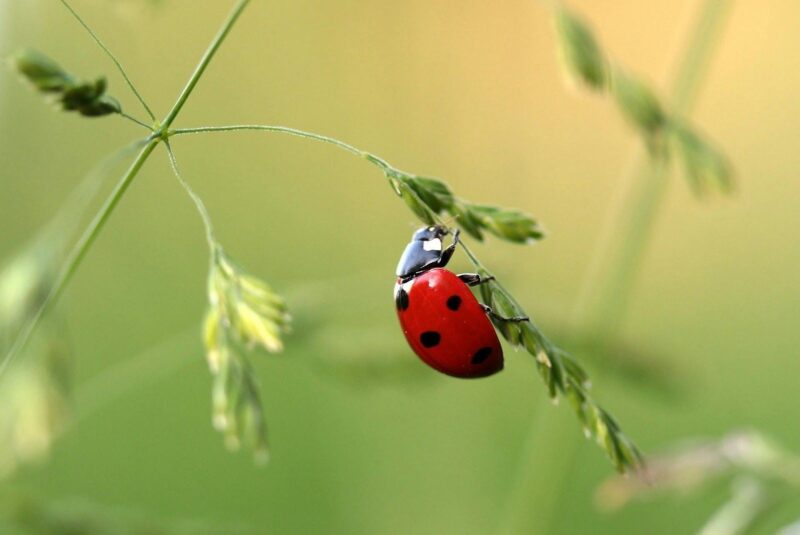
“Ladybug, silver dollar, rabbit’s foot, with a four-leaf clover and a horseshoe.” You’d have to go all the way back to 1958 to recall those lyrics in a song recorded by Billy & Lillie called “Lucky Ladybug”. Only Boomers would ever even have heard of it. But I think of that song often, whenever the term “lucky ladybugs” arises.
Along with silver dollars, rabbit’s feet, four leaf clovers and horseshoes, ladybugs have long been considered a sign of good luck. The brightly colored bugs – actually beetles – have been good luck symbols for centuries. The name “ladybug” originated in the Middle Ages, when farmers prayed to the Virgin Mary for help with pests in their crops. The beetles, which helped control aphid populations, were called “Our Lady’s birds” or “Our Lady’s beetles,” later shortened to “ladybirds” or “ladybeetles.” Over time, much to the frustration of entomologists, this evolved into the popular term “ladybugs.”
But for backyard gardeners, ladybugs really do bring good luck. The little guys are natural pest controllers, gobbling up harmful insects like aphids, mites, and mealybugs, thus reducing the need for chemical pesticides and promoting plant health. Plus, they also act as important pollinators, aid in nutrient cycling, and serve as prey for other animals, indicating a healthy, balanced environment.
Soon, we’ll be seeing ladybugs in our yards and gardens. But don’t ever kill one. It’s bad luck.
