
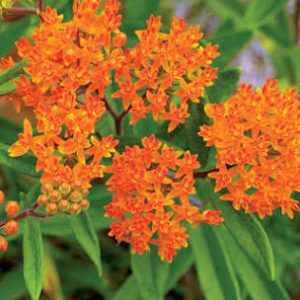
One of our most prized plantings is a gorgeous Butterflyweed.
A few years ago, Nancy picked a half dozen small seeds from a Butterflyweed pod. She started them inside and nurtured them into small plants. When she brought them outside, she knew the squirrels would get at them and dig them up, so she put a heavy wire guard around the plants to keep the pesky from getting down. The plants prospered and had lovely flowers, immediately attracting butterflies, hummingbirds and pollinators.
Butterflyweed is highly prized by gardeners for its large clusters of yellow-orange to bright-orange flowers. The clusters range from 2-4 inches with the foliage providing a dark green backdrop for the showy heads. Sometimes called a Pleurisy Root, the tough root on the perennial was used by Native Americans as a cure for pleurisy and pulmonary ailments.
This showy plant is frequently grown from seed in home gardens. It is also referred to as Orange Milkweed, but unlike true milkweed, this species has no sap. Butterflyweed is native to North America and thrives on prairies, open woods, canyons, and hillsides. It likes well-drained sand, loam, clay, or limestone and full sun. Gardeners say that inevitably butterfly weed will get aphids. Ladybugs will take care of the aphids, or they can be hosed with a high-pressure stream.
One of the best parts about Butterflyweed is that it is highly deer resistant. They don’t like it, and that’s because parts of the plant are poisonous. As a larval host, Butterflyweed attracts Grey Hairstreak, Monarch and Queen butterflies. It’s available now at many nurseries. Plant even now for next spring and for years of beauty to follow.
