
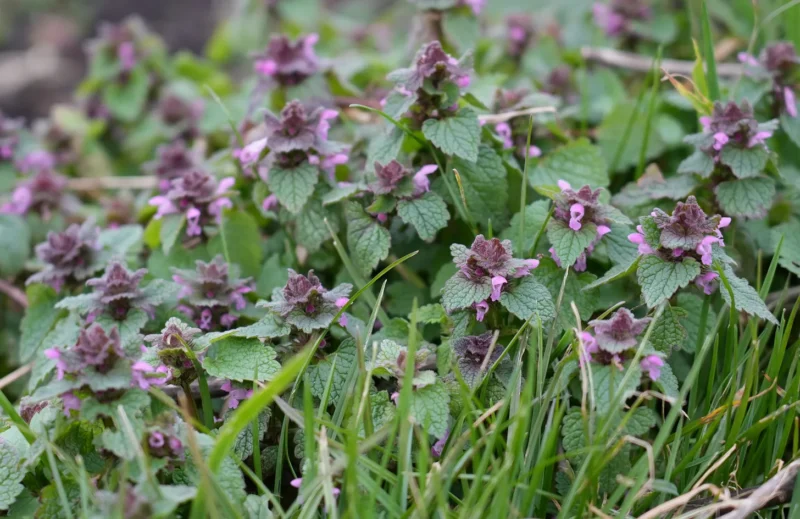
We were driving back from Deltaville recently and noticed lots of soft purple plants growing in many of the winter rye fields. We had seen this before, and the fields can be breath-taking in purple beauty.
But there are many farmers and gardeners, however, who wish these blooms would grow elsewhere. The plant is called Purple Dead Nettle and it’s a beast to control. It’s now popping up in our yard.
According to the Agriculture folks, Purple Dead Nettle is a common annual weed that belongs to the mint family, which explains why it’s such a pest. Like other mints, purple dead nettle is an aggressive grower that spreads like wildfire anywhere it can get a foothold. You can identify it by the distinctive square stems that hold up an umbrella of tiny flowers and small pointed leaves reaching up to an inch long. Getting rid of dead nettle weeds is much more challenging than dealing with many other annual weeds because they tend to go to seed before mowing season even begins. Couple that with the thousands of seeds each plant can release persisting in the soil for years, and you’ve got one durable weed on your hands. One or two purple dead nettle weeds popping up in the lawn can easily be plucked by hand and disposed of as soon as they appear, but a larger population requires a more complicated solution.
Like many weeds, Purple Dead Nettle is not only a wild edible green, but a highly nutritious superfood. The leaves are edible, with the purple tops being even a little sweet.
Since the leaves are relatively fuzzy, they are better used as an herb garnish or mixed with other greens in recipes, rather than being the star of the show. Use fresh dead nettle along with chickweed, dandelion greens, and other “weeds” to make a wild greens pesto. Purple Dead Nettle can also be added to soups, salads, or blended into smoothies. Basically, any way that you would use any other green leafy vegetable or herb
Purple Dead Nettle also has medicinal benefits. It is known in the herbal world as being astringent, diuretic, diaphoretic, and purgative. It’s also anti-inflammatory, anti-bacterial, and anti-fungal.
The leaves can be used on external wounds or cuts, or as a poultice, similar to how you would use yarrow or plantain. This would also make it a good candidate for a homemade herbal salve.
Friend or foe, weed or medicinal super plant, a field of Purple Dead Nettle in full bloom is nothing short of spectacular. It’s a beauty, and a beast.
