
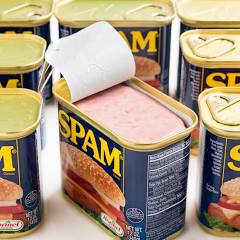
As a teenager, one of my go-to lunches was a Fried Spam sandwich slathered in mustard. Usually, I had two. For Christmas this year, one of my kids gave me a can of Spam as a gag gift, but we ate it the next morning for breakfast and I still enjoy it. When we cruised in Hawaii, I was amused by all the Spam offerings aboard both the cruise ships and even at fancy restaurants. Spam is the overwhelming choice as the official state meat in the Aloha State. It all started in World War II.
The military quickly recognized the values of Spam – a long shelf life, ease in portability and as an inexpensive and nutritious meat source. By the end of the war, the U.S. Army had bought 150 million pounds of the canned meat. During that time, Spam also filtered into all the Pacific diets as a meat source, especially Hawaii.
Spam’s main ingredient, of course, is pork, along with salt, water, modified potato starch, sugar, and sodium nitrite (as a preservative). Natural gelatin is formed during cooking in its cans on the production line. Spam is precooked, making it safe to consume straight from the can, but I and most others prefer a little additional cooking.
Spam stands for “Sizzle, Pork, And Mmmm” according to the admen at Hormel Foods. Soldiers called it meatloaf that didn’t pass its physical – among other not-so-complimentary terms. Spamalot was also a spoof-filled musical comedy from the cast of Monty Python, lovingly ripped off from the film classic Camelot.
Today, “spam” is a derogatory term for unwanted emails and texts, but I still like to think of Spam as the makings of a great sandwich.
