
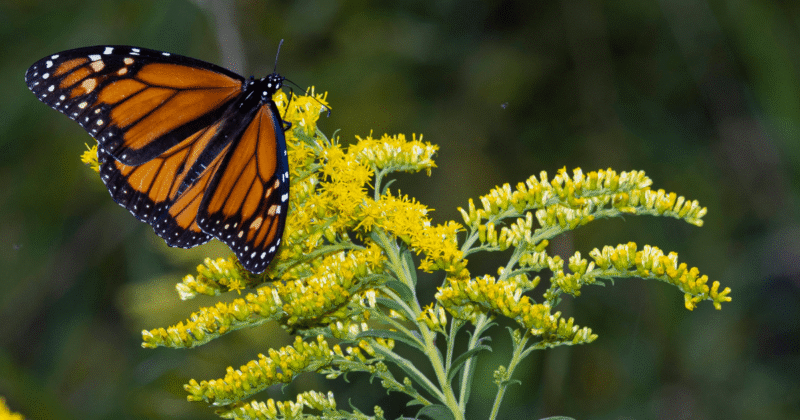
The Virginia roadsides are erupting in gold. Gold as in goldenrod, a valuable wild plant that thrives in meadows and on strips of land where fescue is not prevalent. But the lovely plant gets a bad rap. It is strictly a myth that goldenrod pollen causes allergies. The real culprit is ragweed, which is pollinated by wind rather than insects. Ragweed has tiny inconspicuous flowers that produce huge amounts of extremely fine pollen, which then drifts through the air in hopes of landing on other ragweed flowers – irritating the respiratory systems of unfortunate humans along the way.
Goldenrod, on the other hand, is pollinated by insects, so it produces heavy, sticky pollen to attract and nourish them. The insects pick up some of the pollen when they visit to eat it or drink the flower’s nectar and then transport it to the next flower they stop at – hopefully another goldenrod plant. This pollen never becomes airborne and therefore does not cause allergies. Period.
Goldenrod is also an extremely important plant for pollinators and other insects. It is a key species in many North American ecosystems because so many other species depend on it that if it was removed the entire system would change drastically. In goldenrod’s case, this is mostly because so many things like to feed on it. Over 100 species butterflies and moths use it to host their larvae. Plants in this genus are the only host for many of those species. These butterflies and moths are not only pretty, and important pollinators themselves, but both larvae and adults are also crucial food sources for many species of birds, especially for parents trying to feed their young.
Perhaps more important is the role goldenrod plays is providing abundant nectar and pollen to feed pollinators in the late summer and fall. When many other flowers are slowing down and ending their blooming season, goldenrod fills in as a primary food source for these insects and other animals. This is especially crucial to migratory butterflies like Monarchs, which rely on this plentiful, easy-to-find nectar during their flight south in the fall.
Take time to admire its beauty as you travel this fall and appreciate the vital (and non-allergenic) role goldenrod plays in nature.
