
Kitchens have changed. A lot. Modern kitchens are larger than the entire first floor of the 1950’s starter homes. They have spiffy, stainless steel (gotta’ be stainless steel), double-door refrigerators, center islands as long as stretch limo with city streetlights dangling overhead, and enough cabinets to house all the fine plateware for the Queen of England. The counters, of course, are granite. You can’t sell a house today without granite counters. The very thought. Yes, the kitchens are big, bright and open, so open that your neighbors across the street can see what you’re having for dinner that night.
The kitchen in our first house on Jennings Street in Beckley, WV in 1953 was smaller than a modern walk-in closet. It was eat-in, sort of. We had a small table (with a radio on it, of course) that we gathered around for most meals. If company came, we had a modest dining area next to the kitchen. Two bedrooms, one bath and a convenient living room, completed the first floor.
When the 60’s arrived, stuff started to happen -like Formica counter tops and chrome dinette sets. Formica counters were the cat’s meow – practically indestructible – unless you put a red-hot pan on one; then they bubbled up or even melted. We used lots of trivets and hot pads in those days. But you could beat on them with a hammer, if you had the urge.
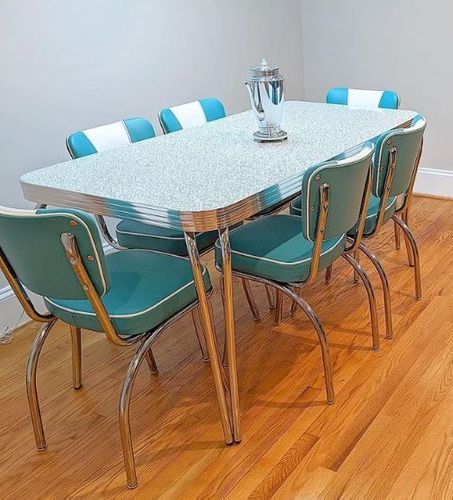
Chrome dinette sets also had Formica tops, often patterned, but with sleek chrome legs and chairs with 100% genuine vinyl seats – which came in colors that piqued the imagination – like turquoise, mustard yellow, bright red and black and white patterns. With chrome dinette sets, families tried to outdo one another in shocking color schemes. But the kitchen sets were versatile, lightweight and most importantly, affordable.
They definitely served the purpose. But really? Turquoise?
