
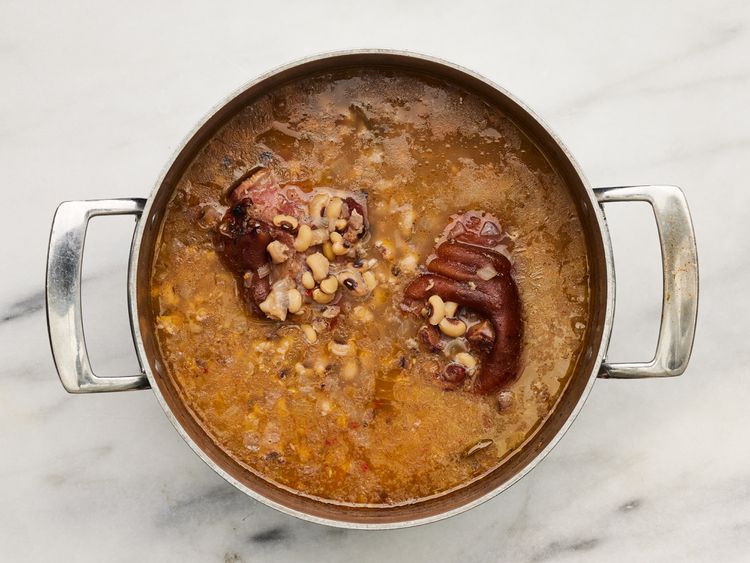
We had corned beef, cabbage and black-eyed peas for our New Year’s supper. If that doesn’t bring us luck, what will? Eating black eyed peas on New Year’s Day is a long-established symbol for good luck, stemming back to West African culture where the natives believed that little legumes not only brought prosperity, but also warded off evil spirits – and I’m all for that.
An interesting story of black-eyed peas bringing good luck came during the Civil War when Union soldiers in General Sherman’s troops raided the Confederate army’s food stash, but left behind black-eyed peas, viewing them as a food for livestock. When the Confederate army returned and had to make do with what remained, they were lucky to have the black-eyed peas to eat during the harsh winter, thus it became a symbol of luck and abundance.
My family – with a deep-southern roots– grew up eating black eyed peas, not so much for good luck, but because they were really good. We never had black eyed peas from a can, rather Daddy would soak dried black-eyed peas overnight, then boil them for several hours the next day, seasoned with fat back or bacon grease.
Daddy also grew black eyed peas in his extensive garden – one of my favorite vegetables. Most folks, I’d say, go their entire lives without the good fortune of eating fresh, black-eyed peas because you rarely if ever see them in the stores and few people plant them in gardens.
I remember them as being easy to shell, unlike lima beans that you had to use a pry bar to un-shell. Black eyed peas, though, popped right out and were plump, sweet and delicious after an hour or so on the stove.
Who knows, I may try panting a row or two in my little garden this spring – and with a little luck – they will grow and prosper.
Happy New Year, Everybody!
Jim
