
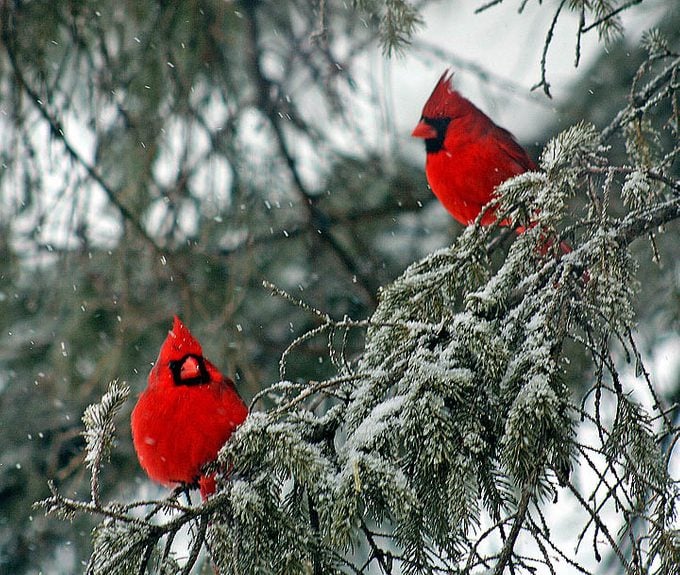
We have had two snows in the last week, and though they weren’t big snows, it was enough to completely cover the grounds and cause extra stress on birds and animals. I have since been feeding my birds extra helpings of seeds and have been observing their activities.
I have two basic feeding areas – one near the kitchen window and beneath my permanent feeders and the other in the way back near my shed where I toss out seeds for the squirrels and the birds. I have noticed lots more activity in the way back where there is more cover – bushes and hedges. Birds are extremely vulnerable when it snows – easy targets for hawks – and I have one that patrols my yard regularly. I also have been feeding extra corn and stale bread to my crows, and they help keep Mr. Hawk at bay.
I have also noticed when the birds are out feeding that the slightest disturbance, even the shadow from another bird will send them diving for cover.
But birds in the snow are resilient creatures. They fluff out their feathers for insulation; they flock together for warmth and find sheltered spots to survive harsh winter conditions.
During snowy periods, birds require high-fat foods to store extra fat and consume more calories to maintain body heat. Sunflower hearts and suet are helpful to their survival. Birds sometimes shiver, to lower their body temperature or tuck one foot at a time into their warm body feathers to reduce heat loss.
They also need water to stay hydrated. I don’t know how they survive in the snow, but somehow they do. They are most interesting creatures.
